










How to improve your local dental SEO – the complete guide
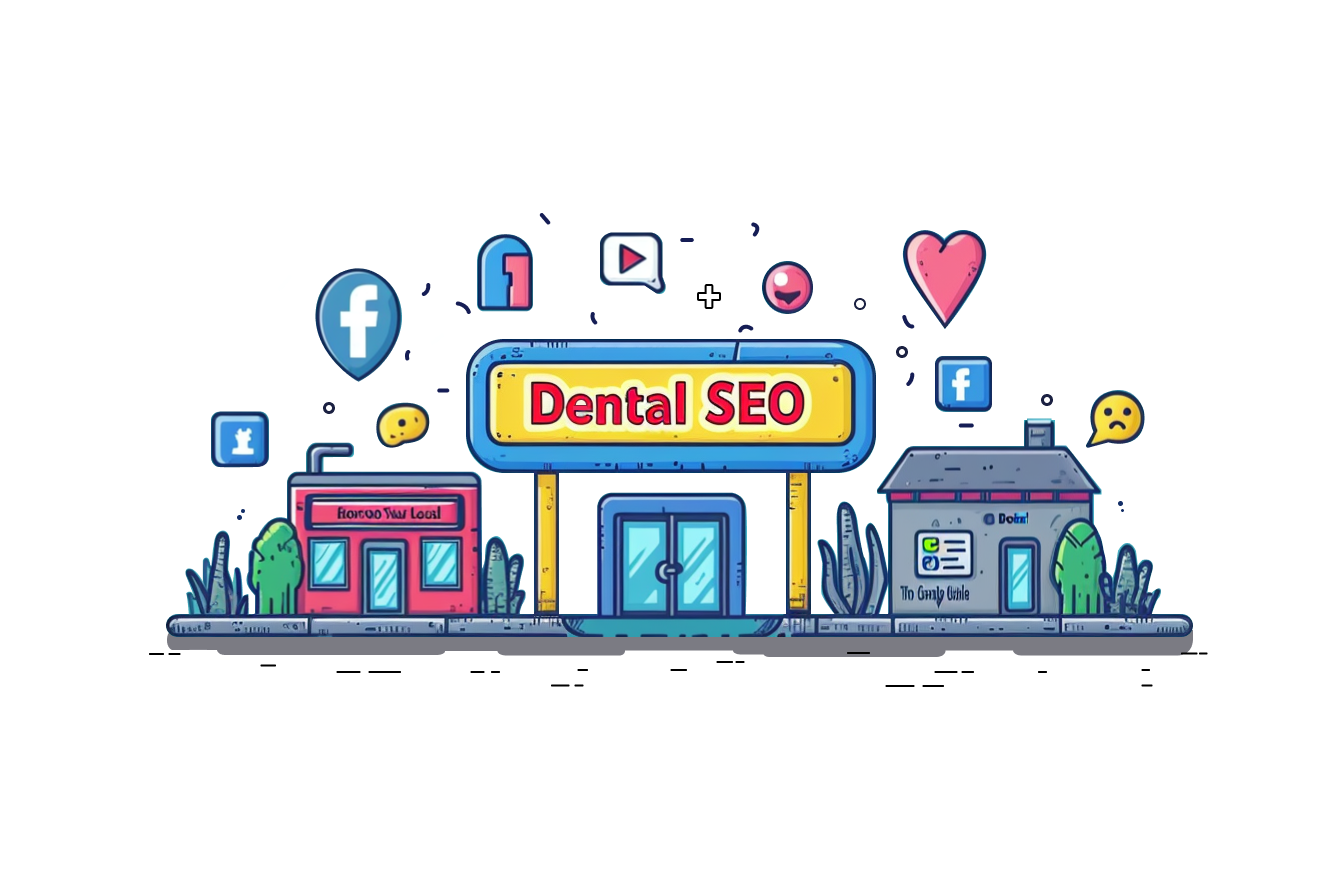
Local SEO is the process of optimizing your dental practice’s online presence and website to rank higher in local Google search results. This helps you attract new patients who are searching for dentists in your area.
Defining Local Search
Local searches are done on search engines like Google by users who are looking for businesses near a specific geographic location. For example, someone may search “dentists near me” or “dental implants Austin, TX”.
As a dentist, you want your practice to appear at the top of these local searches so prospective patients can easily find and contact you. Local SEO helps make this happen.
The Difference Between SEO and Local SEO

While SEO and local SEO have some overlapping principles, there are key differences dental practices should understand when developing an effective local search strategy.
Intent Behind Local Searches
The primary difference comes down to search intent. Regular SEO focuses on users looking for information or products online. Local SEO specifically targets website visitors who are actively searching for a local business to provide them a service right away.
For instance, someone doing a general web search may type in “dental crown procedures” to learn more information. But a local search would be “emergency dentist open now near me” – with the goal of getting immediate care from a business close to their location.
As a dentist, your local SEO helps connect people in urgent need of dental work with your practice. And those leads are much more likely to convert into paying patients.
Optimizing for Geographic Radius
Traditional SEO aims to rank well in search engines on a national or even global scale within a particular niche or for specific keywords. Local SEO takes into account ranking factors that optimize visibility within a tighter geographic radius – allowing you to focus your efforts on being discoverable by searches within your city or region.
You customized your SEO strategy to target patients specifically looking for dentists in the neighborhoods nearest your practice locations. This geo-targeted approach makes sure your services appear when its most relevant to prospective customers, giving you a competitive advantage.
Different Ranking Factors
While excellent content and website optimization certainly matter in local SEO, there are additional location-based ranking signals that must be leveraged:
- Google My Business Listing – A complete and updated listing that contains key information about your practice such as your address, phone number, photos, services, business hours, and reviews. This gives Google accurate signals to understand your relevancy to local searches.
- Positive Local Reviews – The more 5-star online reviews your dental practice has on platforms like Google, Facebook, and Yelp, the more trust and authority you have in the eyes of Google to rank well for local intent keywords and searches.
- On-Site Optimization – Factors like your contact info, location pages, schema markup to identify your business type, and service area pages help Google understand your practice is optimized to serve local patients.
Mastering these area-specific ranking factors along with traditional technical SEO is key for being discoverable to patients searching for dentists in your region. It ensures your website meets the need behind that critical local search intent.
An Example of How Local SEO Works for Dentists
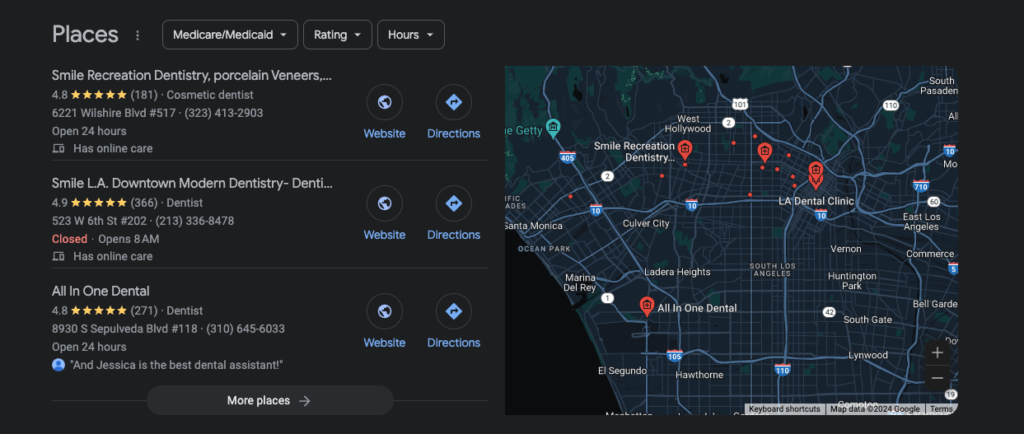
Let’s walk through an example to illustrate the power of effective local SEO for driving new patients to your dental practice.
Imagine Sally just moved to Austin, Texas and needs to find a trusted dentist near her new neighborhood. She pulls out her phone and types “dentist near me in Austin” into the Google search bar.
The local SEO efforts of dentists in the area determine which practices appear in Sally’s search results. The ones ranking highest match her search intent best – having optimized to be discoverable by people looking for dentists in Austin.
For example, Westlake Dental may appear in the map pack at the top because they have strong overall SEO fundamentals: an updated Google My Business listing displaying their Austin address, positive online reviews, a fast mobile-friendly website, and informative content mentioning services like checkups and porcelain veneers.
Austin Dental Associates may also show up high because they have a long history of 5-star patient reviews specifically mentioning the exceptional care received from their Austin office. This review-based reputation and local relevance causes them to rank well.
On the other hand, a dental franchise with only a broad national SEO strategy but no location-specific optimization may have great content but won’t appear to Sally because they haven’t educated search engines about their relevancy for “dentists near me” searches in Austin.
As you can see, the dental practices Sally sees when searching for dentists in her area directly depends on the quality and optimization of each website for local intent keywords and ranking factors. This allows Sally to discover and choose a trusted local dentist to become a regular patient.
Without the right SEO strategy tailored for a geographic service area, a dental practice misses out on connecting with prospective patients like Sally searching for exactly what they offer in their locale. Effective local SEO closes this gap.
Why Local SEO Matters for Dental Practices
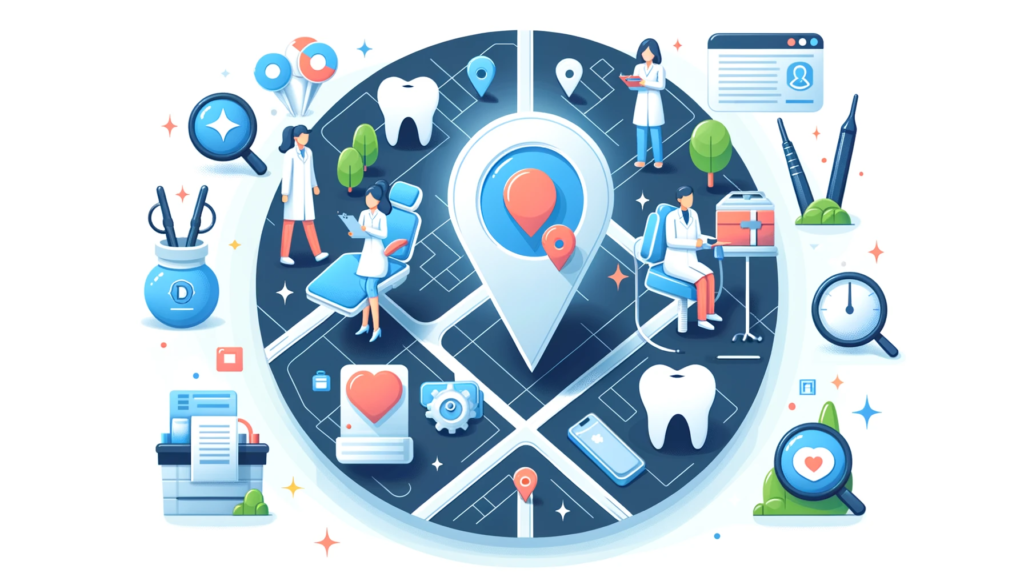
Implementing an effective location-based SEO strategy delivers significant benefits that directly translate to more new patients and practice growth for dentists.
It Drives New Patient Leads
Ranking higher in local Google search returns means more people will find and contact your practice when searching for things like “dentists near me”. Most searchers don’t look past the first page of results, so appearing in these prime spots will dramatically increase your visibility and lead flow.
For example, if you can improve your local pack ranking from #4 to #1 for a high volume term like “teeth cleaning cost”, you may capture 3-4 times more clicks and calls just from that one keyword gain. These add up to tens or even hundreds of valuable new patient opportunities.
It Establishes You as the Go-To Dentist in Your Area
Optimizing online listings and review profiles focused on your geographic service locations gives your practice trust and authority in that region. This improved visibility and reputation makes you stand out as the credible dentist in your city that new residents and visitors rely on when needing care.
Don’t allow competitors to rank higher and appear more reputable in the eyes of searchers. Establish your practice as the recognized local leader and household name in your service areas.
It Drives Qualified Visitors to Your Website
Higher local pack rankings will send a surge of relevant website visitors on a consistent basis. This influx of traffic consists of high-quality leads since visitors have demonstrated initial interest by seeking out dentists specifically in their neighborhoods or city.
Once on your site, you have the opportunity to fully educate these prospective patients on your services, experience, and why you should be their trusted dental provider via content. This fuels your SEO results while converting more traffic into customers.
It Sets You Apart From Other Dentists
You gain a distinct competitive edge over rival dentists in your area who have not invested resources into tailored local SEO and digital marketing efforts targeting neighborhood customer searches. Don’t allow them to siphon away leads just because they have optimized to show up above you.
Use precise geo-modified SEO to ensure you show up ahead of competitors for searches in the regions you serve patients. Dominate the listings to establish category authority and steer more clicks your way.
It Drives Sustainable Practice Growth
Unlike expensive pay-per-click ads with unpredictable results, honing your local SEO strategy delivers more rapid yet sustainable practice growth not tied solely to ad budgets. Organic ranking gains happen over time by consistently providing value to searchers – saving you money better spent on expansion.
For instance, what if you could get 5-10 new patients per month just from rankings rather than paid searches? That adds up very quickly, fueling your growth. Local SEO done right makes this possible over the long-term.
In summary, overlooking location-based SEO as a dentist means handing potential new patients to your competition every single day. Prioritizing these organic marketing best practices is how successful practices position themselves for discovering and converting many more valuable leads week after week.
3 Compelling Reasons Dentists Must Prioritize Local SEO
When creating a sustainable marketing strategy for long-term dental practice growth, there are a few highly compelling factors that make focusing intensely on location-based SEO an urgent must.
Google is Now the Primary “Word of Mouth” Referral Source

In the past, the most trusted and effective patient acquisition channel was word-of-mouth referrals within a community. If you provided quality care, happy patients would spread the word about your practice. But consumer behavior has changed.
Today, an estimated 77% of patients turn to Google and other search engines upon moving or needing a new dentist according to recent surveys. They rely on online results and reviews to determine which dentists to trust. This means cultivating and claiming your place as a reputable area practice on these platforms is now equivalent to word-of-mouth marketing. If you don’t show up prominently, it’s equally as damaging as negative referrals used to be before the rise of search.
It Drives Highly Qualified Website Traffic Over Time
One of the biggest benefits of ranking well for local SEO keywords is that you attract more valuable website visitors ready to take action – converting at much higher rates than general organic traffic. Over time, even just a few strong keyword rankings can transform into dozens of new patients month after month without any added effort.
Rather than paying repeatedly for visitors as PPC ads require, earnings from existing patients can instead be reinvested into excelling your organic presence even more – creating a compounding effect over time for your practice growth.
Fast First-Page Ranking Opportunities Exist
The great news about focusing on local SEO is you don’t necessarily have to compete at the same intensity as broader national SEO keyword landscapes. With more tailored optimization, you can conceivably begin ranking for certain location-based terms within just 30-60 days.
From there, you build momentum with both patients and Google – rewarding your efforts with even better placements. Compare this to 12-18 months average for competitive keywords. Local SEO delivers ROI much faster, making it one of the most efficient strategies worth prioritizing now before it too becomes highly competitive.
Ignoring local SEO means limiting new patients only to existing channels while competitors siphon away organic traffic you could claim. The time is now for dental practices to tap into this powerful source of qualified leads.
15 Steps to Improve Your Dental SEO Locally
Step 1: Proactively Gather Positive Online Reviews
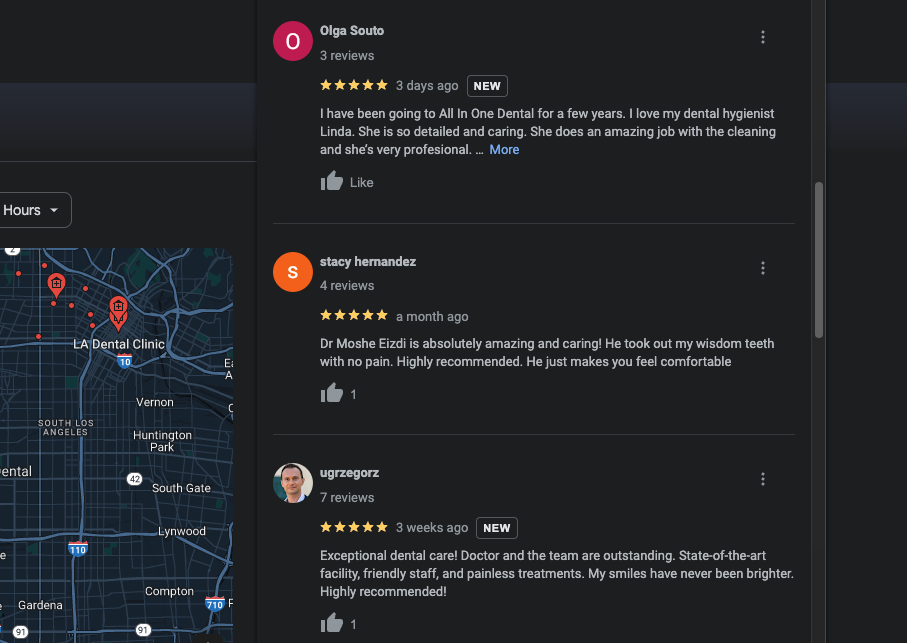
Building an outstanding online reputation should be the first priority for any local SEO strategy. Review platforms like Google, Facebook, and Yelp have essentially become the modern version of “word-of-mouth” marketing in terms of how most patients now pick which new dentist they will trust.
Rather than leaving this to chance, develop an in-house process where requesting honest online feedback becomes a standard part of your patient checkout flow. When you consistently provide 5-star service quality, make sure people know about it!
This gradually establishes your practice as the credible, quality-focused dental service in your area over time. To accelerate this, incentivize happy patients to leave reviews by offering small discounts for checkups or even just by entering them into a monthly lottery. The visibility and social proof provided by positive reviews is that critical for dental practices today.
Step 2: Optimize Your Website Experience

Once you rank well for local SEO terms, your website will likely be the next touchpoint after prospective patients find you on Google. That means ensuring their very first impression when they visit confirms your practice offers a modern, patient-focused experience.
Invest in a mobile-friendly site with an attractive, contemporary design that visually communicates your services, expertise, and dental technology from the moment they arrive. Include genuine patient stories that connect on an emotional level to set you apart from competing practices as well. Treat your homepage as a sales pitch – the goal here is to intrigue visitors enough to move them one step closer to booking an appointment.
Step 3: Assess and Improve Website Speed
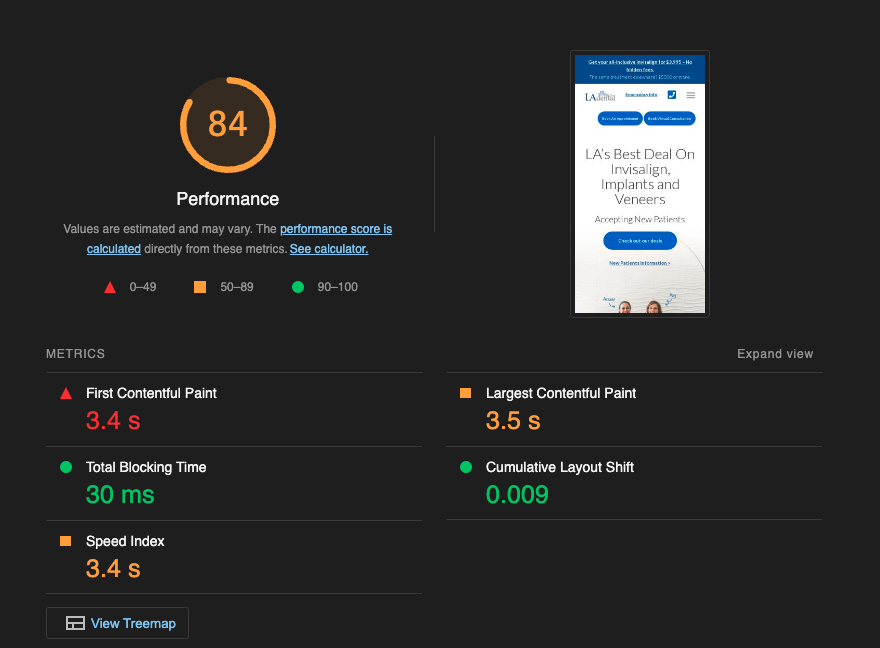
With a strategically optimized website experience as a trust-building foundation, the next priority is addressing technical SEO factors – starting with site speed.
Common issues like high resolution images can slow down load times substantially without visitors realizing it. Test your website speed and fully resolve any bottlenecks here, even if just through image compression.
The reason site speed matters this much for dental SEO is because slow load times remain a top reason visitors will abandon a site before engaging further or calling your office. Don’t allow technology limitations to drive away leads.
Tackling these most fundamental local SEO elements first establishes positive momentum by building patient trust while proactively addressing search engine concerns holding your rankings potential back.
Step 4: Fully Optimize Your Google My Business Profile
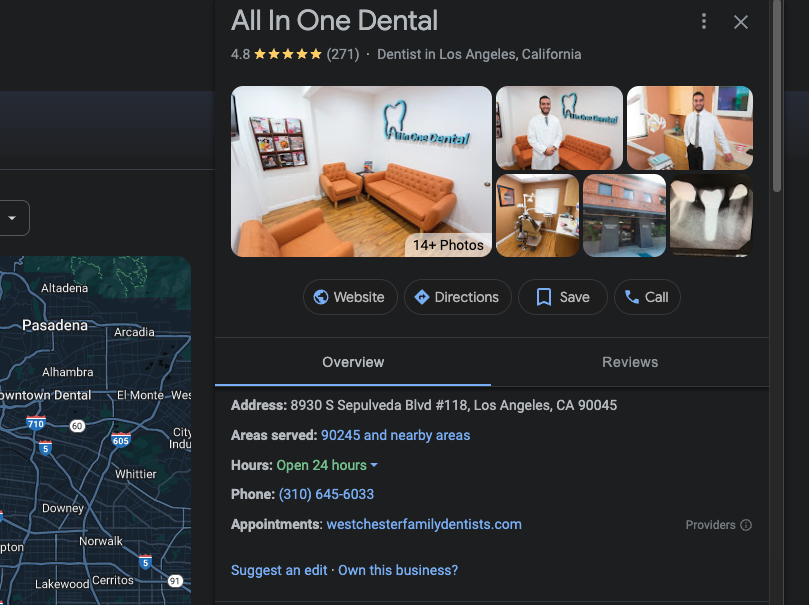
After building strong foundations with reviews, site experience, and technical factors, the next critical component for ranking well locally comes down to complete domination of your Google My Business listing.
This panel displays prominently in local map packs at the top of the first page of search returns, often above your other organic listings. That makes GMB optimization non-negotiable.
Why Your GMB Profile Matters So Much
Google My Business essentially serves as your local homepage on Google. Given its prime real estate for searches like “dentists near me” or “dental implants Austin”, ensuring your practice’s profile is fully claimed, verified, and filled out should be a top priority.
In many cases, you may find this profile generates more calls and conversions than your actual website thanks to its prominent visibility. Treat it as valuable digital real estate.
Comprehensive Google My Business Optimization
Follow this in-depth checklist to optimize every component of your page:
Verify Your Listing Ownership
- Check if you have multiple unverified listings that need to be claimed under your account. Merge any duplicates into a single listing.
Accurate Business Details
- Your practice name, full address with city and zipcode, phone number, and website URL should exactly match your site and listings on other directories. Inconsistencies hurt local signals.
Relevant Dental Categories
- Add niche categories like “Cosmetic Dentistry”, “Pediatric Dentists” if applicable. This helps Google match your services to relevant searches.
Descriptive Profile Content
- Share your full story, experience, specific services, dental technology, awards, and what makes your practice unique in an engaging overview using related keyword themes throughout. Treat this as a local homepage for your brand story.
Updated Business Hours
- Having accurate hours is crucial if you have seasonal closures or extended hours to capture after-work demand. This also signals relevance for “emergency dentist” searches.
Professional Photos
- Include both exterior and multiple interior photos representing your office, team, and work positively. Show off your state-of-the-art equipment.
Promote Validated Reviews
- Reviews here reinforce your practice as a trusted neighborhood dentist in local results. Funnel positive feedback towards accumulating over 50+ reviews.
Getting each component right ensures your practice makes the best first impression on prospective patients browsing their options. Don’t allow competitors to out-optimize your listing!
Step 5: Research Competitors & Identify Website Gaps

Conducting regular competitive analysis gives invaluable insight into what other dental practices in your area are executing well digitally – and more importantly where their strategies are lacking or obsolete.
Use tools like SEMrush, Moz, or Serpstat to analyze all sites ranking on page 1 locally for your target service terms. Break down the variables in their strategy across categories like on-page factors, content themes, links, citations, reviews, social signals, and online presence.
Look for easy areas you can improve on like more informative content or a faster mobile site. Then offset their more entrenched strengths with distinctly tailored optimization strategies of your own leveraging leading-edge local ranking factors.
The goal is to pinpoint potential vulnerabilities you can capitalize on while informing a uniquely optimized presence that aggregates all the components driving the top practices.
Step 6: Create Tangible Patient-Focused Content
While search engines do factor in keyword usage, today they strongly favor dental blogs and web pages that clearly communicate practical value to visitors rather than chasing trends.
Develop pillars of educational content around the most common questions patients have about procedures, insurance, payment plans, oral health concerns, pediatric care, and other topics critical to your audience base. Always present information in easily digestible language rather than complex industry jargon. Show through topic selection and creative messaging that you make understanding patient needs a priority.
Step 7: Promote Content through Value-Added Email
Email nurturing represents one of the most efficient ways to continually re-engage past, current, and prospective patients that have already visited your site once the foundations are built.
Send post-appointment check-in emails guiding them back to your newest informative blog articles. Include quick polls or special discounts that incentivize clicks. This establishes your practice as an ongoing educational resource.
Just remember – the emails themselves must always lead by providing value through content rather than pure promotions or announcements alone. Give motivation to revisit your content and social channels. This drives SEO traffic while nurturing trust with existing patients.
Step 8: Strategically Cultivate Your Social Media Presence
While somewhat time-intensive, consistently maintaining active social media profiles on networks like Facebook, Instagram, and Twitter serves as pivotal social proof signals to prospective patients that you offer modern dental experiences.
Share practice news updates, helpful mini-tips, patient success photos, and behind-the-scenes looks at your office culture to humanize your brand. Respond to comments and questions to demonstrate your dedication. This community engagement helps organically establish authority and trust with nearby searchers.
Step 9: Develop Optimized Individual Service Pages
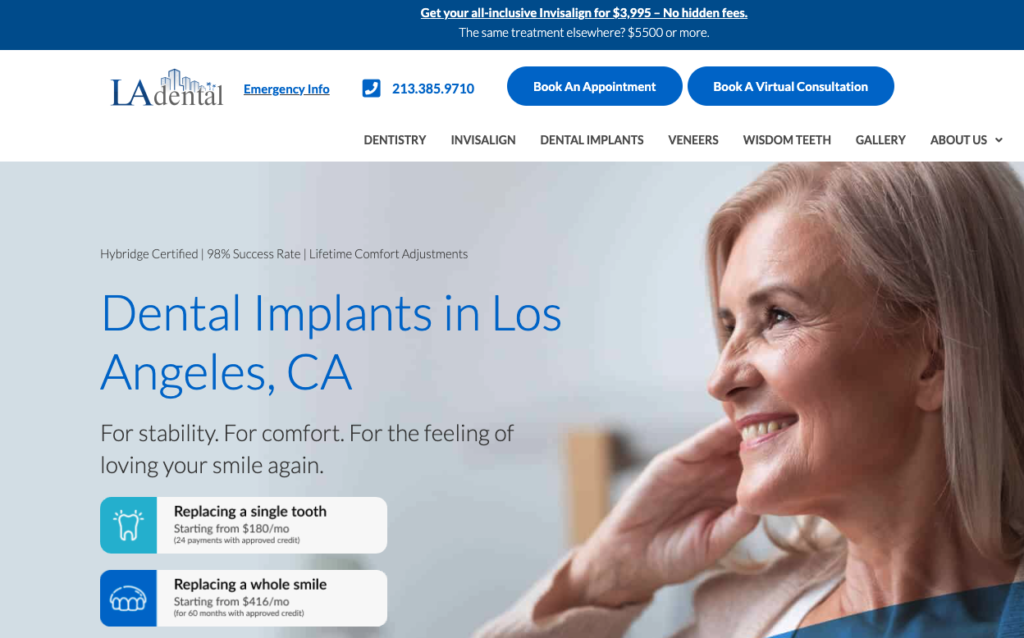
Many dental websites focus solely on broad categories like Cosmetic Dentistry rather than drilling down into specifics. Expand your reach by creating dedicated, in-depth pages highlighting details around your most popular specialized service offerings such as porcelain veneers, dental implants, Invisalign, teeth whitening deals, pediatric dentistry, or flexible monthly payment plans.
Thoroughly optimize each page individually not just for category keywords but also for focused long-tail keyphrases and related questions so they competitively rank well in search returns for a full range of patient intent queries. Funnel searchers to precisely the niche expertise your practice delivers.
Step 10: Incorporate Location-Specific Content
An often overlooked yet critical local ranking signal is integrating content, images, or details confirming your genuine real-world presence in the exact community and neighborhoods you aim to serve patients in.
This can involve a locations page with contact info for each individual office, summaries of local area events your practice regularly participates in, profiles highlighting your dedication to specific neighborhoods, or showcasing community relationships.
Visually demonstrating engagement across your service location cities, towns, and counties builds familiarity and confidence with nearby patients evaluating options. It confirms your practice understands and cares about their area specifically.
Step 11: Uniquely Craft Core Page Elements for Each Page
After establishing your overall website foundation and dental content pillars, the next priority is maximizing every page with proper on-site optimization elements tailored to that page’s purpose. This elevates relevance signals.
Comprehensive Homepage Optimization
Your homepage headline, meta description, body content, and images should focus chiefly on introducing your practice’s services, dental expertise, technology, convenient location, and what makes your approach unique – with related keywords strategically incorporated. Treat this page as the gateway to your brand identity.
Targeted Service Page Optimization
For standalone pages highlighting specialized offerings like Cosmetic Dentistry, Dental Implants, or Invisalign, ensure each is uniquely optimized around category keywords, related long-tail keyphrases, and common patient questions using focused title tags, H1 headlines, meta descriptions, image filenames, body content sections, etc.
Niche Content Page Optimization
Any additional blog posts, cost guides, or FAQ pages ought to be optimized around ranking for hyper-specific informational dental subjects and questions frequently searched for locally. Follow an on-page formula similar to service pages. Own each dental topic in your region.
Approaching customization of these core elements based on the exact topic and intent of each page trains search engines to better understand the full spectrum of expertise and solutions your practice delivers in the context of a local community.
Step 12: Strictly Avoid Duplicated Website Content

A very common mistake dental practices make is having identical or nearly identical content copied across multiple pages of their site. This becomes problematic because search engines will only index and reward one version of that content, costing you rankings for secondary pages.
Carefully audit your website to ensure every page – including service categories and blog posts – offers entirely new and unique information supporting distinct patient search intents and keywords. For example, your locations and hours page will significantly differ from in-depth blog advice guides on specific cosmetic procedures.
If you find thin pages with overlapping content, expand on their length and purpose. Curate or produce customized images for each one as well to reinforce uniqueness. Identify secondary keywords to target. This prevents consolidation around just your homepage.
Step 13: Strategically Incorporate Premium Visual Media
Supplementing your insightful dental content with relevant, high-quality images, infographics, charts, and videos greatly improves visitor engagement and time spent on each page.
But be wary – generic stock photos fail to connect emotionally with prospective patients nearly as much as real patient stories and faces do. Showcase before-and-after transformations, spotlight your caring staff, provide virtual facility tours highlighting state-of-the-art technology. Videos and photo galleries can make tangible emotional connections.
Overall, aim to have multiple custom-fit visual assets reinforcing and enhancing the value provided within your carefully crafted content on every page. This further showcases your practice positively while boosting page authority metrics.
Step 14: Simplify and Refine Website Navigation
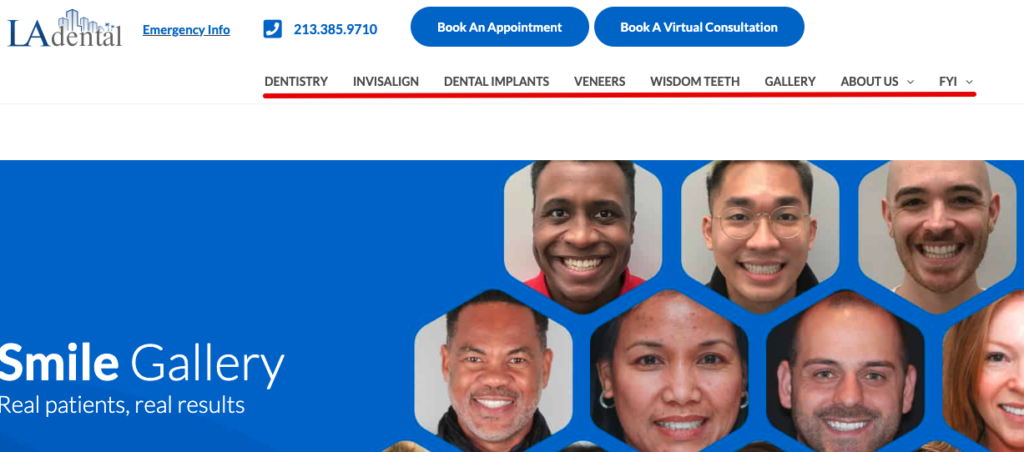
After building a foundation of robust dental content, don’t allow a confusing site structure or cluttered menus to essentially hide your great content from visitors and Google.
Carefully audit page layouts and calls-to-action to identify opportunities to simplify and refine navigation so visitors can quickly find your most important pages like featured services, contact info, FAQs, and appointment booking.
Streamlining site architecture reinforces relevance signals around pages you want search engines to prioritize indexing while reducing barriers to conversion for organic traffic.
Step 15: Target Hyper-Local Keywords in Content Strategy
As you expand page content, prioritize the incorporation of longer-tail keyphrases focused specifically on spotlighting services you offer in precise city neighborhoods and micro-regions within your geographic service area.
For example, “West Seattle porcelain veneers”, “Clifton NJ orthodontists”, or “pediatric dentists for toddlers in San Diego”. Tailor topics around the actual question variations patients search around specific procedures, insurance accepted, costs, ideal ages for treatment, appointment availability, and similar organic themes.
Optimizing pages individually around these hyper-local themes trains algorithms to understand the unique value your practice delivers to different segments of your market – securing those specialized rankings in the process. Own the full spectrum of rankings.
The Most Effective Dental Keywords to Optimize For
An effective local SEO strategy incorporates a range of tailored keyword phrases – from higher volume broad terms to longer-tail variations of popular queries – all refined for your geographic service area.
High-Volume Short-Tail Keywords
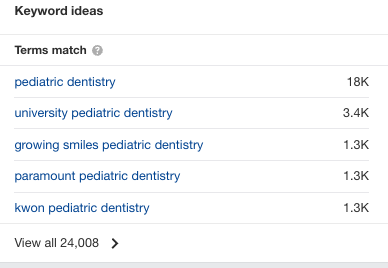
These shorter search terms consisting of just 1-3 words cast a wider net related to general dental services, procedures and practitioner types in your area. Some examples:
- pediatric dentistry
- family dentist
- dentists in Austin
- teeth whitening cost
- dental implants
While less specific in their exact user intent, ranking well for these high-search-volume keywords helps attract patients more broadly across categories, greatly expanding your visibility.
Specific Longer-Tail Keywords
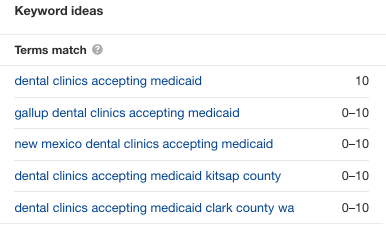
Targeting more specific multi-word long-tail keyword phrases helps you hyper-focus content to match patients seeking very detailed information related to their dental needs, such as:
- most affordable ceramic braces costs
- 24 hour emergency dentist open Sundays
- dentists specializing in extreme dental phobia
- dental clinics accepting Medicaid
- tooth extractions healing process
Optimizing pages around these exact types of keywords demonstrates your expertise in addressing the precise needs of each prospective patient subgroup.
Local Intent Keywords
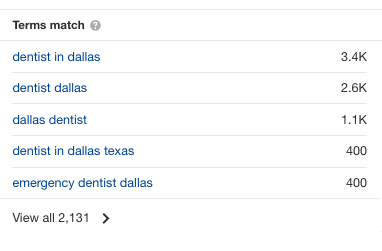
Any shorter or longer-tail keywords can be adapted to become locally relevant by adding the name of your city, county, or neighborhood area to content in order to attract nearby searchers.
For example:
- teeth cleaning procedures Houston
- Spring Branch pediatric orthodontics
- emergency dental clinics in Allegheny County
Blending comprehensive keyword research with geo-targeting matches your specialized services to the exact customized intent of searchers in areas you provide care.
Citations and Links

Building Citations – Broadly Solidify Legitimacy Signals Across the Web
Citations refer to the instances where your dental practice’s complete and fully matching business Name, Address, and primary Phone number (“NAP”) details are mentioned or referenced accurately across the entirety of the web – spanning various online directories, review platforms, association membership listings, blog roll calls, and niche industry resource sites relevant to the dental space.
The core concept here is that the more accurate, correctly matched citations you can proactively build that comprehensively reflect and point back to your NAP information in a consistent manner, the more accumulative signals of professional legitimacy, recognition, visibility, and topic relevancy you organically send to search engines like Google – incrementally cementing your overall local search presence and cementing community familiarity in the process.
The 3 Must-Target Categories of High-Value Citation Sources
Become laser focused on building dozens of matched citations pointing back to your full business details from each of these types of sources:
Well-Recognized National-Level Directories
Omnipresent household name directories likes Yelp, Yellowpages, Facebook local listings, Mapquest, and others serve as pivotal citation hubs that establish baseline validity signals.
Trusted Industry-Specific Resource Sites
Respected associations and dental platforms like Everydentist, Mouthhealthy.org, and various state/national dental societies demonstrate niche authority while expanding visibility.
Hyper-Local and Regional Directories
Getting listed and linked on localized citation sources such as your metro chamber of commerce site, various regional business journals, local publisher index pages, tourism boards, and similar community venues helps cement familiarity with neighborhoods you serve.
Carefully match 100% complete business information (full legal name, proper street address, primary phone number, city, state, zip code) flawlessly across all 3 categories of platforms to maximize the accumulative value of each citation mention, spectacularly reinforcing perceptions of legitimacy across every channel.
Building Backlinks – Strategically Earn Trust-Based Referrals
Gaining dozens of reputable, editorially-conferred backlinks (externally hosted sites linking back to your website pages) helps dramatically reinforce and demonstrate your practice’s authority, dental subject matter expertise, influence as an opinion leader, and overall trustworthiness to the algorithms powering search engines like Google.
While difficult to build at scale, every new quality backlink expands your overall visibility and elevates website authority metrics that directionally can catapult dental website rankings – allowing you to outperform competitors at capturing coveted spots atop page 1 local pack results.
5 Tactical Community-Focused Link Building Outreach Opportunities
Attract numerous trusted links pointing to your most insightful and helpful dental content pages from the following types of regional resources by proactively networking to:
Pitch Relevant Local Dental Blogs
Contact, build relationships with, and pitch story ideas to complementary dental blogs allowing you to contribute specialized expertise via an article or guest post. Use a relatable angle highlighting your patient focus – providing backlinks as the resource.
Foster Relationships with Interconnected Medical Communities
Seek out win-win scenarios to swap website links with nearby orthodontic practices, pediatricians, oral surgeons, and similar specialty providers to showcase each other’s offerings as trusted neighborhood resources.
Sponsor Widely Recognized Community Events
Local 5K’s, fundraising galas, business groups, and causes hungry for sponsors provide the opportunity to negotiate backlinks and brand visibility from their donor pages.
Completely Develop and Optimize the Most Influential Directories
Thoroughly build out in-depth listings on the highest visibility directories going well beyond NAP details to include images, services, bios, patient reviews and any other opportunities to inset links pointing back to niche pages on your website.
Guest Blog on Industry Publications
Look for dentistry trade journals, magazines and resources accepting contributor posts where you can secure bio links as the author.
The more diverse, editorially-relevant referral or mention-based links you can organically obtain from reputable third-party sources such as these, the more credibility transfers through each one – compounding legitimacy metrics that serve to accelerate your local SEO rankings trajectory.
Closely Track Website Performance Metrics to Gauge SEO Progress
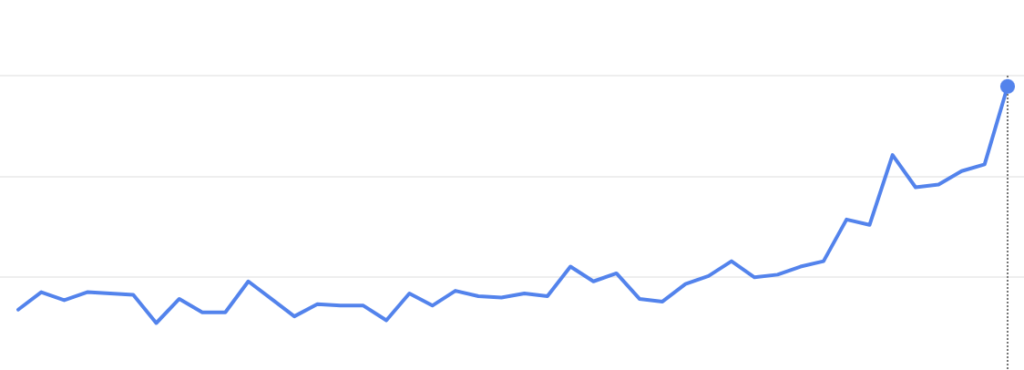
After getting your foundational location-based SEO strategy underway, one of the most pivotal components comes next – closely monitoring and tracking a combination of key quantifiable metrics on an ongoing basis to see specifically how your efforts are directly impacting tangible results over time.
Doing so identifies the specific areas of your strategy working exceptionally well that should be doubled down on as best practices, while exposing underperforming facets needing renewed focus or reassessment.
Continually Measure Precise Search Ranking Positions
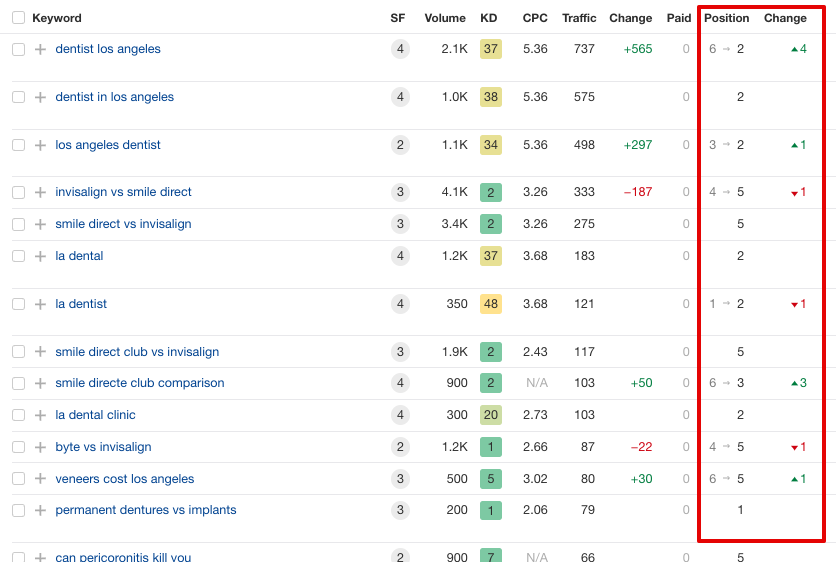
- Use Google Search Console, Moz’s SERP tracking, and automated rank checking tools like RankRanger to periodically check your exact keyword rankings on a month-to-month basis – monitoring both your website’s organic rankings as well as Google My Business map pack placements.
- This sweeping performance tracking determines specifically which pages are becoming more visible in search returns while revealing targeting opportunities around phrases not yet on page 1. Document your progress.
In-Depth Analysis of Website Traffic Patterns and Trends
- Install Google Analytics tracking throughout every page of your dental site to monitor total monthly visitors and sessions, traffic surges during certain seasons or from specific posts, identify which geo-locations your referrals are actually coming from, gain insight around visitor behaviors – from paths taken to content engaging them most.
- Traffic patterns mirror your actual conversion potential, while exposing gaps revealing opportunities like lagging service categories needing more education-based keywords and content to drive interest for example.
Carefully Review Overall Website Conversion Rates
- Set up Goals and Events tracking in Google Analytics tied to your website’s calls-to-action so you can actively count exactly how many form fills, phone calls, or booked appointments are directly attributed to organic search traffic month-over-month.
- This vital data reveals precisely how well your SEO visibility is converting into tangible patient acquisition results. If goals fall short of targets, revisit pages driving traffic and optimize flows.
Consider Investing In Dedicated Enterprise SEO Tools
Robust paid platforms like Semrush, Ahrefs, Moz and BrightLocal offer an abundance of proprietary auditing tools to tackle technical errors, discover fresh geo-modified keywords, provide rich rank tracking, backlink analysis, site speed tests, link building avenues and far more – everything needed to unlock advanced white-glove optimization.
Monitoring your dental website’s key metrics provides invaluable live insight into exactly how prospective patients are actually engaging with your SEO presence. Let the numbers tell the full story!
Complement SEO with Paid Local Ads
While SEO delivers results over the long-term, paid local ads like Google Ads instantaneously get your practice in front of patients the moment they search. Combining the approaches amplifies new patient acquisition.
Select keywords based on what you already know is driving website traffic and landing page conversions. Then target those same searches via paid ads – redirecting searchers to tailored landing pages.
Set precise geographic radius bids so ads only run in zip codes you provide service. Additionally, limit distribution by time of day or specific weekdays when ideal patients are active.
Google provides robust analytics on paid campaigns down to conversions by keyword allowing you to double down on highest ROI traffic. Let PPC momentum compound while organic rankings gradually improve.
Blending optimized SEO with surgical paid local ads unlocks powerful patient volume almost immediately, cost-effectively accelerating practice growth. Treat them as complementary strategies.
Leverage Dental SEO Experts To Accelerate Results

Now that you understand the pivotal importance of search engine optimization for dentists, you may feel overwhelmed trying to tackle every recommendation solo while still managing your practice. Don’t stress!
Partnering with a dedicated dental SEO agency like MAS Group allows you to outsource strategy to experts that specialize specifically in local search to accelerate growth.
At MAS Group, our experienced team has helped hundreds of dental clients achieve top rankings by seamlessly handling critical components like:
- Technical website audits and optimizations
- Content building around dental-focused keywords
- Expanding online listings and review profiles
- Improving local citation signals
- Identifying link building opportunities
- And so much more!
We become your trusted SEO advisors – taking the workload off your team’s shoulders so you can focus entirely on providing 5-star patient experiences.
If you’re ready to start maximizing your presence online to capture more website traffic and new patients, we offer flexible SEO service packages tailored to your goals.
Let our team handle the heavy lifting in getting you found across search engines now!
FAQs on Improving Local Dental SEO
Wondering about the specifics of SEO for your dental practice? Here are answers to the most pressing questions:
How Much Does SEO Cost for Dentists?
The cost varies based on needs but expect roughly $500-$1,500 monthly for an agency managing key optimization tasks to build organic presence over time.
How Long Does it Take to See Ranking Results?
Keyword ranking gains from an effective strategy start becoming visible within 4-6 months as you demonstrate relevance, with the biggest jumps typically seen 6-12 months in.
How Can I Monitor Progress?
Tools like Google Analytics, Google Search Console, and Moz track website traffic, rankings for target keywords, website conversion rates and other metrics showing SEO efficacy.
What’s a Realistic SEO Goal to Set?
Based on your region and niche, a reasonable goal is achieving page 1 rankings for 10-20 hyper-local keywords within 12 months. From there results compound.
Is DIY Dental SEO Realistic?
While some basic tasks are manageable in-house, the technical nature of modern SEO and its constantly shifting dynamics make working with a dedicated dental marketing agency advisable for best results.
Is Local SEO Worth the Investment?
Given how influential online discoverability has become, SEO delivers unparalleled return by consistently elevating your practice locally – converting website visitors into loyal patients. So yes, it’s incredibly valuable.
Conclusion
I hope this extensive guide has shed light on what an immense opportunity exists right now for dental practices who invest in strategically honing their local SEO presence to tap into organic search traffic from prospective patients.
As consumer behaviors around finding reputable nearby service providers like dentists continue shifting toward discovery primarily through Google and online review platforms, having expertise and solutions matched precisely to customer search intent will only grow more pivotal for sustaining and expanding your practice.
Now you should feel equipped with actionable best practices around optimizing your website’s on-page factors, expanding offline and online listings/citations, leveraging helpful content to attract specific dental-related concerns, monitoring meaningful ranking and conversion metrics, and options for accelerating growth through paid ads or collaborating with an SEO agency.
Just remember, optimization is an ongoing process. But by laying the proper foundations for local search domination early on, your practice can transform into the prominent neighborhood resource patients turn to as they move into your area. Own that visibility through niche and patient-centric SEO.
will contact you

In the near future, our manager will contact you.